Restaurant social media marketing: a practical guide for UK independents
Which platforms an independent UK restaurant needs, what to post, how often, photos, captions, reviews, measuring it, and a weekly routine that fits service.
In short
- Most independent UK restaurants need three channels kept properly: Instagram, Facebook and a Google Business Profile with a current menu and hours.
- Ofcom found Facebook and Messenger reached 93% of UK online adults in May 2025 and Instagram 78%, so the two do different jobs and most restaurants need both.
- Three to five good Instagram posts a week is plenty for most independents, as long as you can keep it up all year.
- Ask every guest for a Google review with a link or QR code; offering anything in return breaks Google's rules.
- Judge your social media on bookings, covers and enquiries, and use likes as a rough guide at most.
Restaurant social media marketing for an independent comes down to three channels kept properly: Instagram to show the food and the room, Facebook to reach locals and fill events, and a Google Business Profile with a current menu and hours. Post three to five times a week and answer your reviews. Then judge the whole thing on bookings and covers.
Which platforms matter for restaurant social media marketing?
Instagram, Facebook and Google, roughly in that order of effort. TikTok is optional, and only worth it if someone on your team enjoys making video (and I mean enjoys it).
The audience figures make a decent case for keeping Facebook in the mix. Ofcom's Online Nation 2025 report found Facebook and Messenger reached 93% of UK online adults in May 2025, against 78% for Instagram and 56% for TikTok. Facebook's audience leans slightly towards over-35s, while Instagram skews strongly towards 18 to 34 year olds. Two different crowds, then, and most restaurants want both of them through the door.
UK online adults using selected platforms, May 2025
Source: Ofcom, Online Nation 2025
Think of Instagram as the window people peer through before they book. Someone hears about you from a mate, looks you up, scrolls the grid, and either saves you for Friday or moves on. That's why good photos and short clips matter more here than anywhere else: the grid is most of what they'll judge you on.
It's easy to write off as the platform your mum uses, but your mum books tables too. The same Ofcom report found that on an average day in May 2025, 69% of UK online adults used Facebook or Messenger. In my view its local groups and event listings are where it earns its keep for a restaurant, so I'd use it for events, set menus, opening hours changes and anything a 50-year-old organising a birthday dinner for twelve needs to know. Our guide to Facebook marketing for pubs goes deeper, and almost all of it applies to restaurants too.
Google Business Profile
Your Google Business Profile behaves a lot like a social network, and it's where plenty of last-minute "where shall we eat?" decisions get made: Google Maps was used by 77% of UK adult smartphone users in May 2025, according to Ofcom.
Google says local results are mainly based on relevance, distance and prominence (how well known you are), that complete and accurate profiles are more likely to show up, and that more reviews and positive ratings can help your local ranking. You can publish updates, offers and events straight to your profile. For single-location food and drink businesses in the UK, Google may also show event, deal and special posts from your Facebook and Instagram in a featured section of your profile on mobile, which is a nice bonus for posts you were writing anyway. Our Google Business Profile guide covers setup properly.
TikTok
TikTok reached 56% of UK online adults in May 2025, and its 18 to 34 year old users spent an average of 49 minutes a day on it (Ofcom). If your guests skew young and somebody in the kitchen is a natural on camera, it can work well. If not, leave it alone. An account with four videos and nothing since spring does you no favours.
What each channel is for
| Channel | Best for | What to post | Suggested rhythm |
|---|---|---|---|
| Showing the food, the room and the people | Dish photos, short kitchen clips, what's on this week | 3 to 5 posts a week | |
| Locals, events and older regulars | Events, set menus, opening hours, the same photos | 3 to 5 posts a week, plus events | |
| Google Business Profile | People choosing where to eat right now | Current menu and hours, photos, an update or event post | 1 post a week, menu always current |
| TikTok | Younger guests, if someone loves making video | Kitchen and bar clips, behind the scenes | Only if you can keep it up |
Rhythms are my suggestion for a small team. Pick a pace you can keep all year.
What should a restaurant post on social media?
Post whatever makes someone want to book this week. Day to day that means the food, the people cooking and serving it, the room when it's full, and anything that's on.
Here's a rough mix I'd start with if you're posting four times a week:
- Around half should be food. One dish, named, with the price if it's on the regular menu. "Hand-rolled pappardelle, beef shin ragù, £17" does far more work than "pasta night vibes".
- About a quarter should be people and the room: the chef at the pass, front of house laying up, the window table when the light's good. Ask before you film anyone, staff included.
- The last quarter covers what's on and practical news, like a set lunch, a supper club, Mother's Day bookings opening, new opening hours, or the week you're shut in January.
- Every so often, add proof. A guest's photo reposted with their permission (here's how to do that properly) or a review that says something specific.
What I'd skip: made-up national days for dishes you don't serve, motivational quotes, stock photos, and "Happy Monday!" posts with nothing in them.
A date and a reason to act make an ordinary post work much harder. "Autumn menu starts Thursday, tables for the first weekend are going, link in bio" beats "something exciting is coming...". If you've got a new menu on the way, the menu launch plan takes you from four weeks out to a fortnight after.
How often should a restaurant post?
Three to five feed posts a week on Instagram is a sensible target for most independents. Facebook can take most of the same posts, and your Google profile wants a fresh update about once a week. That's my recommendation, for the dull reason that it's a pace a busy kitchen can keep up in a wet February as well as in December, and an account that goes quiet for three weeks looks shut.
More posts won't rescue posts nobody stops for. Instagram says its feed ranking leans on predictions such as how likely someone is to spend a few seconds on a post, comment on it, like it, share it, or tap your profile photo (Instagram ranking explained). I'd take one post people linger on over three they thumb straight past.
Timing helps a little too. Post when people are deciding: mid-afternoon for that night's dinner, Thursday or Friday for the weekend, a week or two ahead for anything that needs booking. Once you've got at least 100 followers, your insights show the times they're most active on Instagram (About Instagram insights). For the longer version, see how often a pub or restaurant should post on Instagram.
Photos, video and captions that make people book
Most restaurant photos let the food down for dull reasons that are easy to fix, usually because they were taken at 9pm under yellow heat lamps with half the pass in the background. Sort that out and you're already ahead of a lot of places near you.
Photos
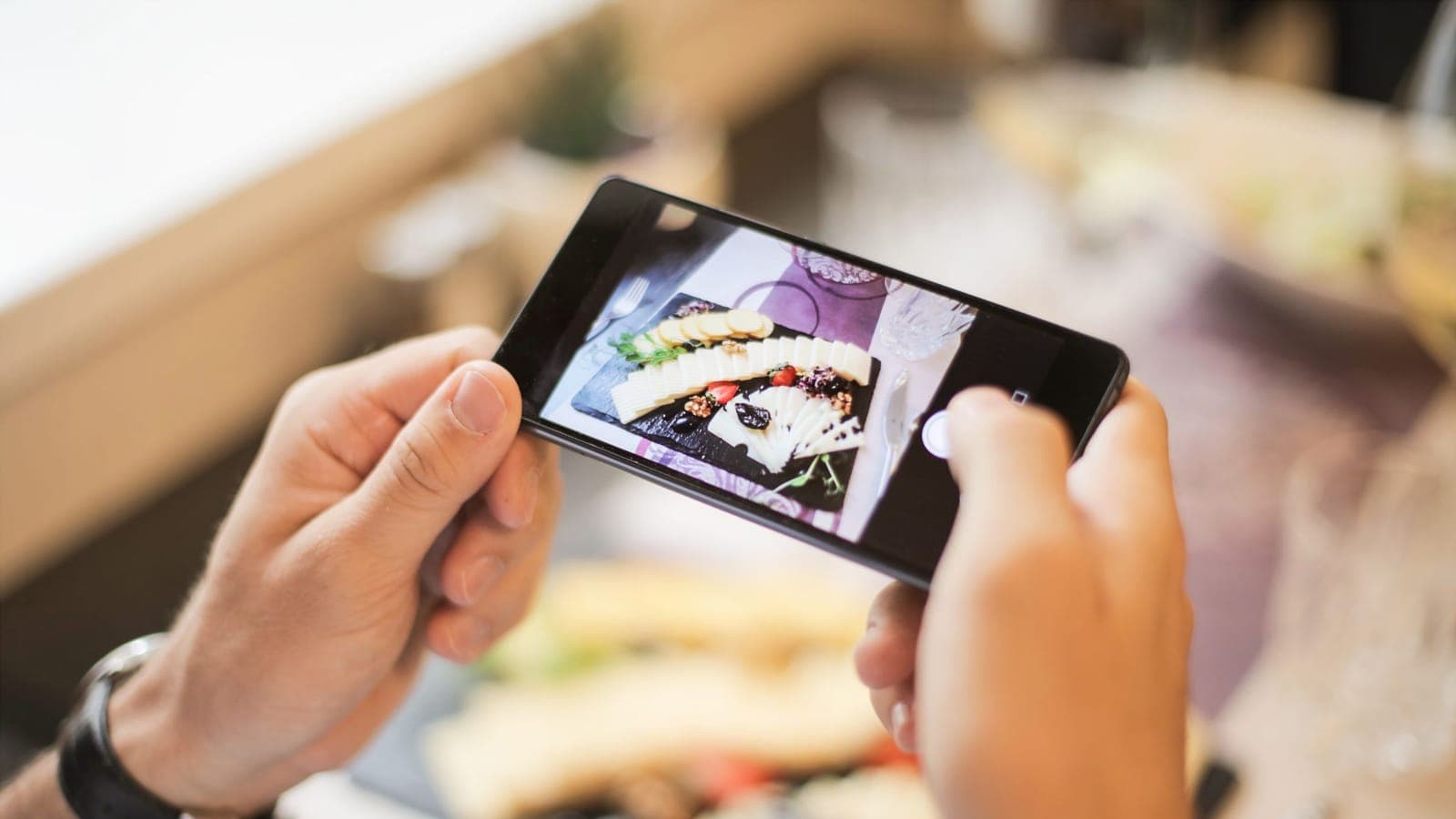
Shoot before service, near a window, with the overhead lights off if you can. One dish per shot. Wipe the rim. Shoot flat things (pizza, sharing boards) from above and anything with height (a burger, a layered dessert) from roughly where a diner's eyes would be. No flash. Then take twenty frames of each dish, because one of them will be the good one.
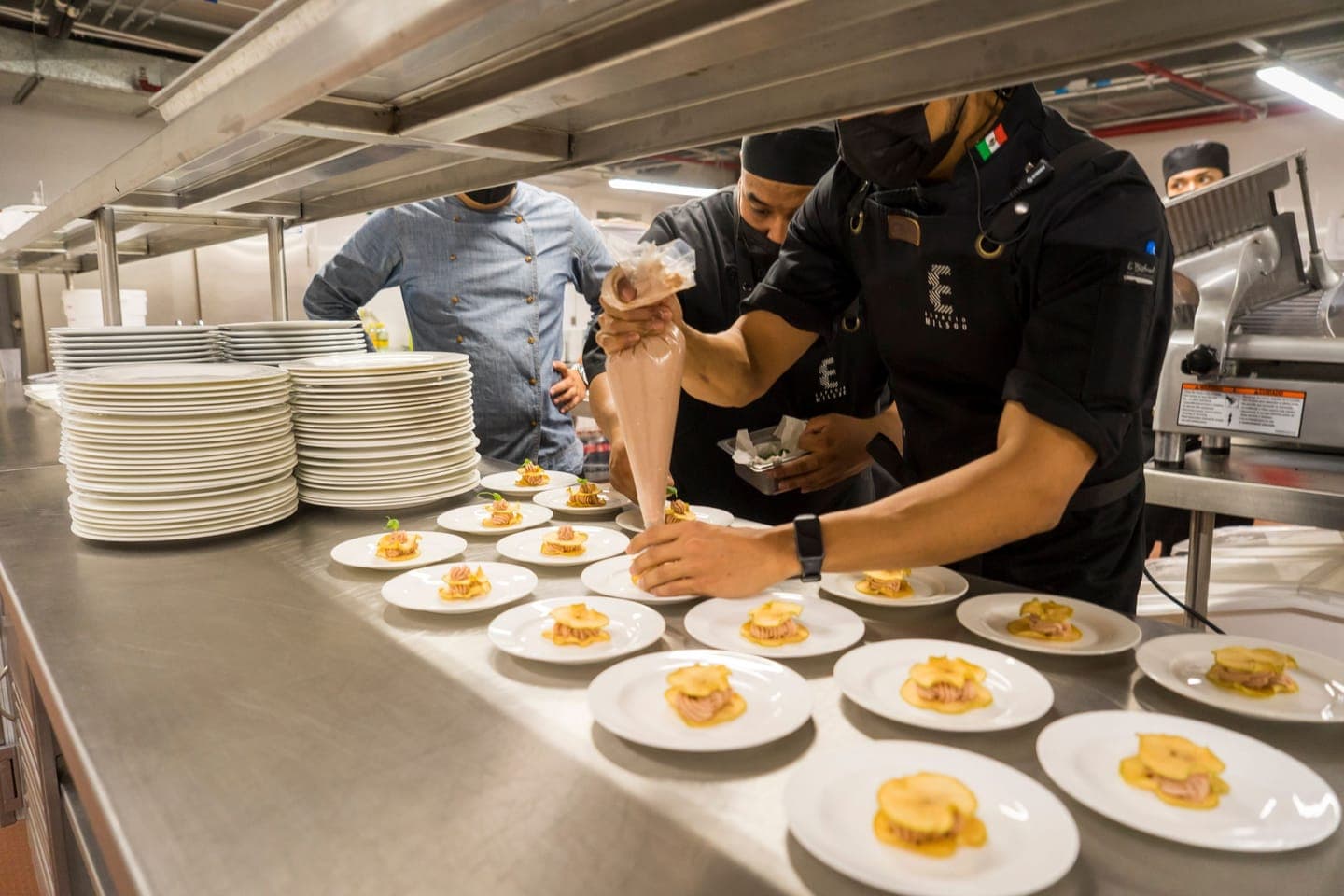
Our phone food photography guide goes into light, angles and editing in much more detail.
Video
For Reels, Instagram says the most important predictions are how likely you are to reshare a reel, watch it all the way through, like it, and go to the audio page (Instagram ranking explained). So keep clips short enough that people finish them: the pan catching, the sauce going on, the pass at 8pm on a Saturday. Ten to twenty seconds is plenty in my view. The same page says Instagram makes reels that have already been posted on Instagram less visible, which is another reason to film your own instead of reposting somebody else's.
Captions
Put the useful bit first. What is it, when is it, how much, and how do I book? Then stop. A set lunch caption can be as plain as this:
Two courses for £22, Tuesday to Friday, 12 till 2.30. This week it's celeriac soup or salt cod croquetas, then hake with brown shrimp butter or wild mushroom risotto. Walk in, or book through the link in our bio.
Write the way you'd talk to a regular at the bar. If you'd never say "indulge in our exquisite offerings" out loud (and please don't), it shouldn't be in a caption either. Our guide to Instagram captions for restaurants has templates for the posts you write most often.
How should a restaurant handle reviews?
Treat reviews as part of your social media, because Google shows them right next to your Business Profile in Maps and Search (Google), which makes them part of your first impression whether you like it or not.
Getting more reviews
Ask everyone. Google suggests giving customers a link or a QR code that takes them straight to the review form (Tips to get more reviews), so put it on the bill, a small table card or your booking confirmation email. Then there's what you mustn't do:
- Offer anything in return. A discount, a free dessert, a round on the house: Google treats incentives like these as fake engagement and prohibits them.
- Ask only the happy tables. Google's Maps content policy bans selectively soliciting positive reviews, and pressuring people to leave one while they're still on the premises.
- Get staff or family to review you. Reviews from current or former employees count as a conflict of interest under the same policy.
UK consumer law covers this ground as well. Fake reviews, and reviews that hide the fact they were incentivised, are banned, and the Competition and Markets Authority published guidance for businesses on fake reviews in April 2025. (General information, not legal advice.)
Replying
Google's own advice is to keep replies short and polite, sign them with your name or initials, respond in good time, never share a reviewer's private details, and leave out the sales pitch, meaning no offers or promotions in a reply (Tips to get more reviews). It also says you don't need to thank every reviewer publicly. I'd still reply to every critical review within a day or two, and to the good ones whenever you've got something to add beyond "thanks".
Lovely Sunday lunch. The lamb was spot on and the staff were brilliant with our toddler. Only let down by a long wait for puddings, nearly half an hour.
Reply from Sam, general manager
Thanks Hannah, really glad the lamb hit the spot. You're right about puddings: Sunday is our busiest service and that section got backed up. We now have a second person on desserts from 2pm on Sundays. Hope to see the three of you again soon.
There are reply templates for the awkward ones in how to respond to restaurant reviews.
How do you know if your restaurant's social media is working?
Look at bookings and covers first, and treat likes as a weather report. If your Instagram looks lively and Thursday's still dead, something's off.
The business numbers I'd track once a month:
- Bookings by source. If your booking system lets you add a "How did you hear about us?" question, add one with Instagram, Facebook and Google as options.
- Covers against the same weeks last year, so the seasons don't fool you.
- Enquiries that arrived by DM or Messenger (private dining, big tables, allergies).
Then the platform numbers. On Instagram, the insights overview shows views, interactions, new followers and the content you shared, for any timeframe within the past 90 days (About Instagram insights). Interactions include likes, comments, saves and shares. I watch saves and shares far more closely than likes: I read a save as "we should go there" and a share as someone sending you to a friend. Because the window stops at 90 days, jot the numbers down monthly.
On Google, your Business Profile's performance screen shows the searches people used to find you, profile views, direction requests, calls, website clicks and clicks on your menu. Direction requests at 6pm on a Friday are about as close to a booking as an online number gets.
There's a fuller walk-through of the Instagram side in Instagram insights for restaurants. Five or six numbers in a spreadsheet, once a month, is enough to see what's moving.
A weekly social media routine that fits around service
Budget about 90 minutes a week, plus ten minutes a day for replies, and do most of it on your quietest day. Here's how I'd lay it out for a restaurant that's quiet on Mondays and Tuesdays.
A weekly routine for a busy restaurant
- 01Monday: plan (30 minutes)Check bookings, events, specials and the weather. Pick four posts for the week and note what each one needs.
- 02Tuesday: shoot (20 minutes)Before lunch service, by the window. Photograph the dishes you need and film one short clip at the pass.
- 03Tuesday: write and scheduleWrite the captions, schedule Instagram and Facebook, and add one update to your Google Business Profile.
- 04Daily: replies (10 minutes)Answer comments, DMs and new reviews, ideally before evening service while you're still fresh.
- 05Friday: one live momentA quick clip or photo of the room when it's full. It takes thirty seconds and shows you're busy.
- 06Month end: check the numbersBookings by source, covers against last year, Instagram saves and shares, Google direction requests.
A few habits keep it going. Shoot in batches, since setting up the light once for six dishes is the same faff as setting it up for one. Schedule what you can, so the Thursday 4pm post goes out while you're mid-prep. Keep one live moment a week for the real thing, because a clip of a rammed dining room on a Friday is hard to fake and takes thirty seconds to film. And if Monday comes and nothing got planned, post one decent dish photo with the week's specials and crack on.
If you'd rather not write and schedule the week yourself, Venuesmith builds a plan from a sentence about what's coming up, writes the captions, adds your branding and lines the posts up for Instagram and Facebook, and nothing goes out until you've approved it.
Frequently asked questions
Do restaurants still need a Facebook page?
Most do. Ofcom found Facebook and Messenger reached 93% of UK online adults in May 2025, with 69% using them on an average day, and the audience leans slightly older than Instagram's. That makes Facebook the better home for events, set menus, group bookings and changes to opening hours. You can reuse your Instagram photos there; just write the caption for someone who wants the details.
Should a restaurant be on TikTok?
Only if you can keep it going. TikTok reached 56% of UK online adults in May 2025, according to Ofcom, and its 18 to 34 year old users averaged 49 minutes a day on it. It suits restaurants with plenty happening in the kitchen and someone who likes being on camera. If that isn't you, put the time into Instagram and your Google Business Profile instead.
Can you offer a discount in exchange for Google reviews?
No. Google's policy treats offering incentives such as discounts or free food in exchange for reviews as fake engagement, and prohibits it. It also bans asking only your happy customers. Under UK consumer law, reviews that hide an incentive are banned too, as the Competition and Markets Authority's 2025 guidance explains. You can ask every guest for an honest review with a link or QR code.
What should a restaurant post when nothing new is happening?
Your regular menu, photographed properly, one dish at a time. Then the people: who's cooking, who's been on the floor longest, who makes the bread. Practical posts earn their place as well, such as opening hours, how to book the private room, or whether you take walk-ins. Most of your followers haven't eaten their way through the whole menu, so the old favourites are news to them.
How much time does restaurant social media take each week?
About 90 minutes a week plus ten minutes a day for replies is enough for most independents, if you batch it. Plan on your quietest day, shoot several dishes in one session before service, then write and schedule the week's posts in one sitting. You can spend more, though I'd back a steady routine you keep up all year over a busy fortnight followed by silence.
Sources
- Online Nation 2025 report, Ofcom, checked October 2026
- Instagram ranking explained, Instagram, checked October 2026
- About Instagram insights, Instagram Help Centre, checked October 2026
- Tips to improve your local ranking on Google, Google Business Profile Help, checked October 2026
- Create and manage posts on your Business Profile, Google Business Profile Help, checked October 2026
- Tips to get more reviews, Google Business Profile Help, checked October 2026
- Prohibited and restricted content, Maps User Contributed Content Policy Help, checked October 2026
- Understand your Business Profile performance and insights, Google Business Profile Help, checked October 2026
- Fake reviews (CMA208), Competition and Markets Authority, checked October 2026